BCLS + AED Instructor
Basic Cardiac Life Support (BCLS) Instructor Course Singapore
Last updated: 20 August 2026
8 hours + 2 attachments
SkillsFuture funding available
TL;DR: The BCLS instructor course Singapore learners attend is only the first half of certification. You need a non-expired BCLS+AED Provider certificate to enrol, and two supervised teaching attachments within six months of the course before an Instructor certificate is issued. It is valid for two years and renewed by teaching, not by re-sitting.
Basic Cardiac Life Support Instructor Course
Click a card to flip and view key details
Most people book the instructor course expecting a qualification at the end of the day. What they get is an entry ticket to two supervised attachments, and the clock on those starts the moment the course finishes.
This page covers who may enrol, what the six-month attachment window means in practice, when the two-year certificate actually starts, and what keeps it alive. Every requirement below comes from the Singapore Resuscitation and First Aid Council (SRFAC), which sets the standard for this course.
1
What is the Basic Cardiac Life Support (BCLS) instructor course?
Quick Answer: It is the teaching qualification that lets a BCLS+AED Provider run Provider courses at an accredited Training Centre. SRFAC treats it as a three-part process: the course, two supervised teaching attachments, then the Instructor certificate issued by the Instructor Training Centre.
The distinction matters because different bodies handle each part. The course and the certificate come from an accredited Instructor Training Centre (ITC). The attachments can be done at any accredited Training Centre (TC). Your appointment as a working instructor comes from the Training Centre that engages you.
- It teaches instruction, not clinical skill. Entry assumes you already hold the clinical side through the full BCLS+AED Provider course.
- It is incomplete on its own. SRFAC issues the initial Instructor certificate only on confirmation of two completed supervised teaching attachments.
- It leads to an appointment. A Floor Instructor is appointed by an accredited Training Centre after the initial certificate is attained.
Key takeaway: Passing the instructor course does not make you an instructor. The certificate arrives after the attachments, and the appointment arrives after the certificate.
Not sure the instructor route is the right next step?
The teaching pathway sits alongside the provider and first aid courses rather than replacing them. Compare the SRFAC-accredited course range →
2
Who can enrol in the Basic Cardiac Life Support instructor course?
Quick Answer: You must hold a non-expired BCLS+AED Provider certificate on the day you attend. SRFAC sets no minimum teaching experience for entry, but the Provider certificate is a hard gate, and an expired one disqualifies you until it is renewed.
The entry list is short, which is why the Provider certificate catches people out. A certificate that expires between booking and course date is expired on the day. The sequence below is what SRFAC audits against.
| Stage | Requirement | Deadline | Handled by |
|---|---|---|---|
| 1. Entry | Non-expired BCLS+AED Provider certificate | On the course date | Learner |
| 2. Course | Attend the BCLS+AED Instructor course | Scheduled intake | Accredited ITC |
| 3. Attachments | 2 supervised teaching attachments | Within 6 months of course completion | Any accredited TC |
| 4. Certificate | Initial Instructor certificate issued | Within 30 days of the attachment form being submitted | Conducting ITC |
| 5. Appointment | Appointed as Floor Instructor | After the initial certificate | Engaging TC |
Sources: SRFAC, TC/ITC Reference Guide BCLS+AED, 23 August 2023, sections 2–3; Entry/Renewal Requirements, 7 May 2019.
If your Provider certificate is close to expiry, renew it first through the BCLS + AED refresher course, which SRFAC allows from three months before expiry to three months after. Booking a BCLS instructor course Singapore intake on a lapsed Provider certificate wastes both.
Key takeaway: Check your Provider expiry date against the course date, not against today. The certificate must be non-expired when you walk in.
3
The two supervised attachments, and the six-month window
Quick Answer: SRFAC requires two supervised BCLS+AED teaching attachments at any accredited Training Centre, completed within six months of finishing the instructor course. The Instructor Training Centre issues the initial certificate only after both are confirmed, so the window is the real deadline.
Most learners underestimate this part, because it depends on other people’s course calendars. An accredited Training Centre only needs to run three Provider courses a year to keep its accreditation, so attachment slots are not always available on demand.
- Finish the instructor course. The six-month clock starts at course completion, not certificate issue.
- Arrange two attachments. These can be at any accredited BCLS+AED Training Centre, not only the one that ran your course.
- Teach under supervision. Each attachment is a supervised teaching session on a live Provider course.
- Submit the attachment form. The ITC issues the certificate within 30 days of the completed form.
Book the attachments before you sit the course. Two sessions inside six months sounds comfortable until you are matching your leave against someone else’s training schedule.
Key takeaway: The six months is a scheduling problem, not a study problem. Line up both attachment dates before the course, while intakes are still open.
4
When does the instructor certificate start and expire?
Quick Answer: The Instructor certificate is valid for two years, and SRFAC states that validity starts from the date the instructor course was completed, not from the date the certificate is issued. Time spent finishing the attachments is therefore counted against your first two years.
That backdating has a direct cost. Take five months to complete both attachments and roughly five months of the two-year certificate have gone before it reaches your hands. Clear them in six weeks and you keep that time.
Two related points sit alongside it. If the certificate is not immediately available, SRFAC allows the centre to issue a memo confirming completion, which helps when an employer needs proof early. And the certificate must carry the Programme Director’s name, the centre name, the course type, the validity period and a reference number.
Key takeaway: Slow attachments shorten your first certificate. The two years run from the course date regardless of when the certificate is printed.
5
How much teaching keeps an instructor certificate alive?
Quick Answer: A BCLS+AED Instructor renews by teaching, not by re-sitting a course. SRFAC’s faculty criteria require at least two BCLS+AED Provider courses conducted per year across the two-year validity, and renewal is done by the Training Centre that engages the instructor.
Providers renew by attending. Instructors renew by delivering, which is why an inactive instructor lapses even though their clinical skills have not changed.
| Grade | Courses per year | Type of course that counts | Renewed by |
|---|---|---|---|
| Floor Instructor | At least 2 | Provider course, as Instructor | Engaging Training Centre |
| Chief Instructor | At least 2 | Provider course, as Chief Instructor | SRFAC, on the Programme Director’s letter |
| Instructor-Trainer | At least 1 | Provider course, as Instructor | SRFAC |
| Chief Instructor-Trainer | At least 1 | Instructor course, as Chief Instructor-Trainer | SRFAC, on the Programme Director’s letter |
Source: SRFAC, TC/ITC Reference Guide BCLS+AED, 23 August 2023, section 2 (Instructing Faculty and Provider Entry and Renewal Criteria).
One number is worth confirming with your Training Centre in writing. The faculty criteria state two Provider courses per year for a Floor Instructor, while the certification section later in the same guide states at least one. The 2019 entry and renewal requirements also state two, so planning around two is the safer reading.
One fallback is documented. Instructors who cannot meet two BCLS+AED courses a year, but do run at least two CPR+AED courses a year over two years, may renew as CPR+AED instructors instead. That keeps a teaching role through the CPR + AED (Hands-Only) course, at a narrower scope.
Key takeaway: Certification here is a use-it-or-lose-it arrangement. Confirm the quota your Training Centre will hold you to before your first year is half gone.
Planning a teaching pathway for your team?
Instructor intakes and attachment slots have to be scheduled around live Provider courses. Ask about upcoming instructor intakes →
6
What happens if instructor certification lapses?
Quick Answer: Every instructor grade gets twelve months after expiry to recover, and recovery is by supervised attachment rather than by re-sitting the course. A Floor Instructor needs two attachments; the senior grades need one. Past twelve months, you restart at the entry criteria.
That is more forgiving than the Provider re-certification route, which allows only three months. It also works differently: the new validity runs from the date of your last attachment, not from your old expiry date.
| Lapsed grade | Grace window | Supervised attachments required | New validity starts from |
|---|---|---|---|
| Floor Instructor | 12 months | 2 instructor attachments | Date of last attachment |
| Chief Instructor | 12 months | 1 chief instructor attachment | Date of last attachment |
| Instructor-Trainer | 12 months | 1 instructor-trainer attachment | Date of last attachment |
| Chief Instructor-Trainer | 12 months | 1 chief instructor attachment | Date of last attachment |
Sources: SRFAC, TC/ITC Reference Guide BCLS+AED, 23 August 2023, section 2; Entry/Renewal Requirements, 7 May 2019.
Two conditions travel with that route. Recovery attachments do not count towards the yearly quota, so a returning instructor has catching up to do. And the senior grades sit on top of a valid Instructor certificate, so a Chief Instructor whose Instructor certificate has lapsed cannot renew the senior status alone.
Key takeaway: Twelve months of grace is generous, but recovery costs attachments that earn you nothing towards the next renewal.
7
Where the instructor grade sits on the SRFAC ladder
Quick Answer: Floor Instructor is the first of five teaching grades. Every grade above it requires four years of active experience at the grade below, plus either an attachment or a recommendation, and each is approved by SRFAC rather than by the training centre.
Knowing the ladder early changes how you plan the first four years, because the experience requirement is counted in active years, not calendar years.
| Grade | Experience required | Additional entry requirement | Validity |
|---|---|---|---|
| Floor Instructor | None stated | Instructor course plus 2 teaching attachments within 6 months | 2 years |
| Chief Instructor | 4 years active as Instructor | Recommendation by 1 Chief Instructor and the Programme Director | 2 years |
| Instructor-Trainer | 4 years active as Instructor | 1 Instructor-Trainer attachment at an accredited ITC | 2 years |
| Chief Instructor-Trainer | 4 years active as Instructor-Trainer | 1 attachment plus recommendation by 1 Chief Instructor and the Programme Director | 2 years |
Source: SRFAC, TC/ITC Reference Guide BCLS+AED, 23 August 2023, section 2 (Instructing Faculty and Provider Entry and Renewal Criteria).
Above Floor Instructor, no certificate is issued at all. SRFAC records the senior grades as a status on its own web directory, valid for two years. Every grade still rests on a current BCLS+AED Provider certificate underneath.
Key takeaway: The four-year requirement counts active years. Missing a teaching quota does not just risk a lapse, it delays every grade above.
8
Why the centre's accreditation status matters to you
Quick Answer: Only an accredited Instructor Training Centre can issue an Instructor certificate, and accreditation is audited every two years. SRFAC also states that any course a centre conducts outside its submitted audit dates, once accreditation has expired, is considered invalid.
That last point is why you check a centre’s status on SRFAC’s directory before booking, not after. The obligations an accredited centre carries are specific:
- A minimum course volume. An ITC must run at least one instructor course a year; a Provider Training Centre at least three courses a year.
- A two-year cycle. Accreditation runs two years, and SRFAC recommends applying for renewal three months before expiry.
- De-listing after six months. Accreditation lapsed more than six months is removed from the SRFAC directory.
- Records that get audited. Attendance lists, assessment papers, evaluation forms, certificate records and manikin disinfection logs.
- Fixed teaching ratios. A default of one instructor to one manikin to four learners, with one instructor, two manikins and up to six learners allowed for manikin-based hands-on work.
That last ratio shapes your working life once you qualify. It sets how many learners you can supervise in a practical group.
Key takeaway: Check the centre on SRFAC’s directory before you book. A certificate is only as good as the accreditation behind it.
9
Fees, GST and SkillsFuture funding
Quick Answer: Medlink quotes instructor course fees in SGD inclusive of GST, which has been 9 per cent since 1 January 2024. Where a course is listed on the MySkillsFuture portal, SkillsFuture Credit may apply, and eligibility is decided by the Skills and Workforce Development Agency (SWDA, formerly SWDA) rather than the training centre.
A BCLS instructor course Singapore quote is harder to compare than a provider one, because the cost of qualifying is not only the course fee. Three questions make one comparable:
- Is the figure GST-inclusive? The rate rose to 9 per cent for supplies made on or after 1 January 2024, per IRAS guidance on the GST rate change. Medlink quotes inclusive figures.
- Are the attachments included? Two supervised attachments stand between the course and the certificate. Ask whether they are arranged and covered, or handled separately.
- Is funding separate from price? Yes. SkillsFuture course fee funding applies to approved courses, and the base tier of SkillsFuture Credit is available to Singapore Citizens aged 25 and above. Check your balance before assuming it covers the fee.
For current fees, intake dates and group arrangements, speak to the Medlink training team. Quotes are issued against a specific intake.
Key takeaway: Price the whole pathway, not just the classroom day. The attachments are part of what it costs to hold the certificate.
10
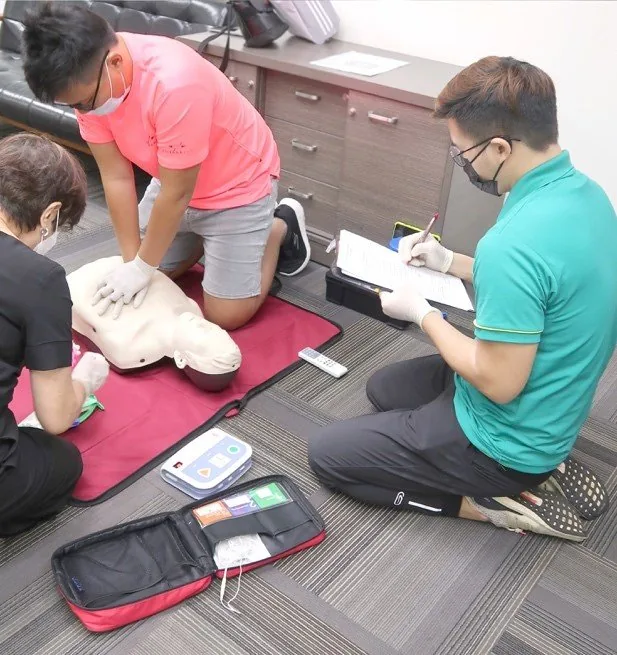
Inside Medlink’s BCLS Instructor course
Quick Answer: Medlink runs the BCLS Instructor course as one day of eight hours at 30 Sam Leong Road, plus two supervised in-house teaching attachments. Entry requires a valid BCLS Provider certificate. Assessment is a 30-question theory paper, four practical stations and the two attachments, with three attempts allowed on each.
The course content mirrors the BCLS Provider syllabus you will be teaching, which is the point — you are assessed on the same seven areas, to instructor standard:
- Adult cardiopulmonary resuscitation.
- Adult relief of foreign body airway obstruction.
- Child cardiopulmonary resuscitation.
- Child relief of foreign body airway obstruction.
- Infant cardiopulmonary resuscitation.
- Infant relief of foreign body airway obstruction.
- Application of an automated external defibrillator (AED).
Entry requirements and health notes. Entry needs a valid BCLS Provider certificate and enough English to teach in it. Trainees must be physically fit, since the practical assessment includes two minutes of continuous chest compressions and ventilations; anyone with back, knee, spinal, joint, heart or lung conditions should consult a doctor first, and trainees who are or may be pregnant are advised to enrol after maternity leave.
| Component | Requirement |
|---|---|
| Entry requirement | A valid Basic Cardiac Life Support Provider certificate |
| Theory paper | 30 multiple-choice questions, three attempts allowed |
| — Basic Cardiac Life Support | 20 questions, 70% to pass |
| — CPR (Hands-Only) + AED | 10 questions, 80% to pass |
| Practical | Adult and infant CPR + AED; adult and infant choking relief |
| Attachments | Two supervised in-house teaching attachments |
| Attendance | 100% required to be eligible for assessment |
Source: Medlink Healthcare Group, BCLS Instructor course page, read 23 September 2026.
Certification
What the course awards on successful completion.
1
Basic Cardiac Life Support (BCLS) Instructor Certificate
Accredited by SRFAC and valid for two years. Results are released on the day of training or within two working days, and the credit-card certificate follows.
The classroom day is the short part. The certificate is not issued until both in-house attachments are complete, so plan the teaching dates at the same time as you book the course.
Key takeaway: You are examined twice — once on the resuscitation skills, once on your ability to teach them. The two attachments are the second exam.
Accreditation
11
How to enrol with Medlink
Quick Answer: Send your current BCLS+AED Provider certificate with your enquiry. The expiry date determines whether you are eligible for the intake you want, and the attachment planning that follows the course is easier to arrange at the same time.
Enrolment is a short conversation with one document attached.
- Confirm your Provider certificate is non-expired. If it is close to expiry, renew it before the instructor course rather than after.
- Send the certificate details. The centre records entry eligibility, and SRFAC audits those records.
- Choose an intake. Instructor courses run less often than Provider courses, so dates are usually the constraint.
- Plan both attachments. Identify the two supervised sessions that fit inside the six-month window before the course begins.
Medlink is a Singapore healthcare group providing first aid and resuscitation training alongside industrial paramedicine and HCSA-licensed ambulance services. See the course range on the Medlink Healthcare Group website, or send your certificate details through the contact page.
Key takeaway: Bring your Provider certificate to the first conversation. Eligibility, intake choice and attachment planning all follow from its expiry date.
12
Conclusion: the course is the short part
The BCLS instructor course Singapore learners search for is one day inside a process measured in years: six months to finish the attachments, two years of validity that started before the certificate arrived, two Provider courses a year to keep it, and four active years before the next grade opens.
Two dates belong in the calendar the day you finish the course. Six months out, when the attachment window shuts. Two years from the course date, when the certificate expires.
If your Provider certificate has lapsed, that comes first. If your wider first aid cover needs renewing too, the Standard First Aid refresher covers a separate set of workplace duties from the resuscitation ladder described here.
13
Frequently asked questions
A non-expired BCLS+AED Provider certificate on the day of the course. SRFAC sets no minimum teaching experience for entry, but an expired Provider certificate disqualifies you until it is renewed.
No. SRFAC requires two supervised teaching attachments at an accredited Training Centre within six months of the course. The Instructor Training Centre issues the certificate within 30 days of the completed attachment form.
Two years, running from the date the instructor course was completed rather than the date the certificate is issued. A slow attachment period therefore shortens your first certificate.
By teaching. SRFAC’s faculty criteria require at least two BCLS+AED Provider courses conducted per year as an instructor, and the Training Centre that engages you carries out the renewal.
Within twelve months of expiry you complete two supervised instructor attachments, and the new validity runs from the date of the last one. Past twelve months, you restart at the entry criteria.
Not for long, because every grade renews on a course quota. SRFAC does let instructors who cannot meet two BCLS+AED courses a year, but who run at least two CPR+AED courses a year over two years, renew as CPR+AED instructors instead.
Ready to train as a BCLS+AED instructor?
Send us your Provider certificate details and we will confirm your eligibility, the next instructor intake, how the two supervised attachments will be scheduled, and a GST-inclusive quote.
More From Medlink
Popular first aid courses
Explore other SRFAC and SWDA-accredited courses run by our team, from infant care to workplace certification.
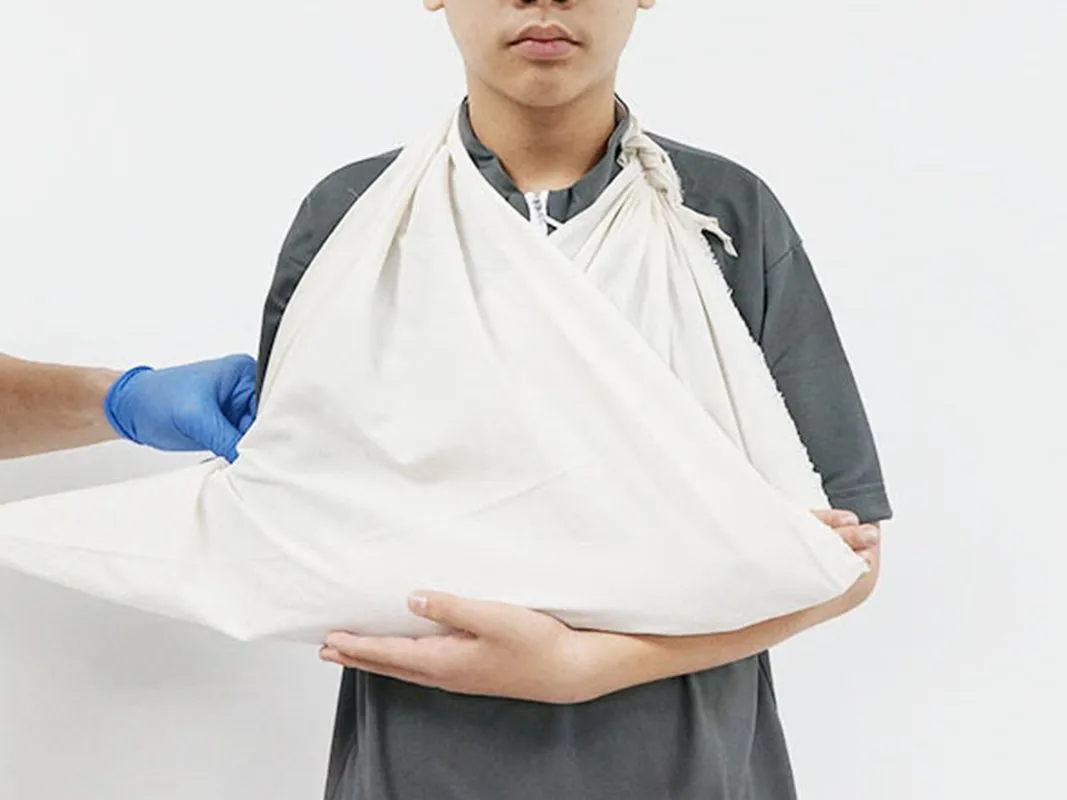
Standard First Aid
+ AED
$196.20 incl. GST ($180 before GST)
See Details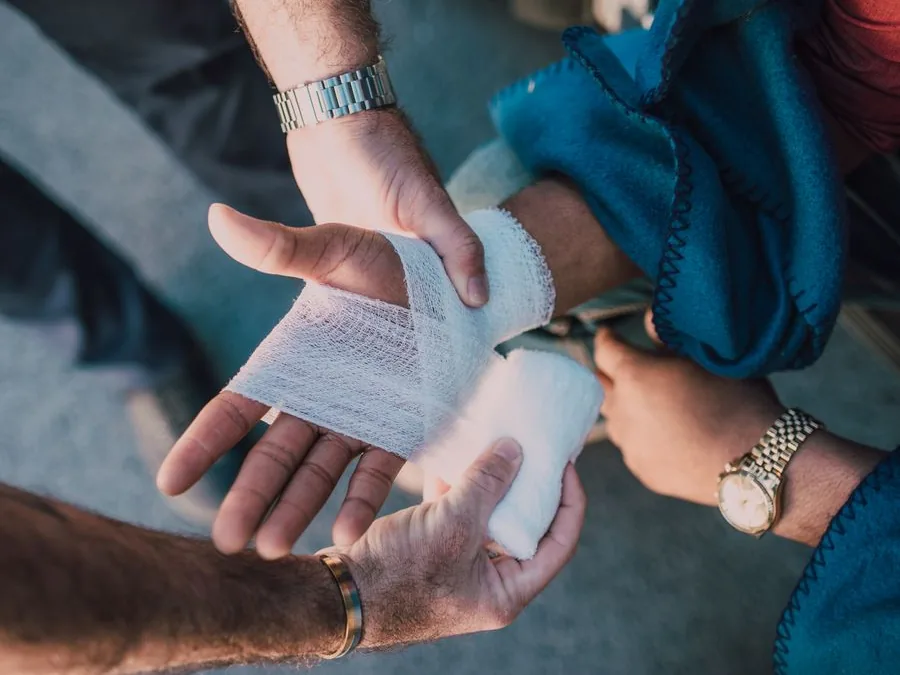
Basic First Aid
+ AED
$141.70 incl. GST ($130 before GST)
See Details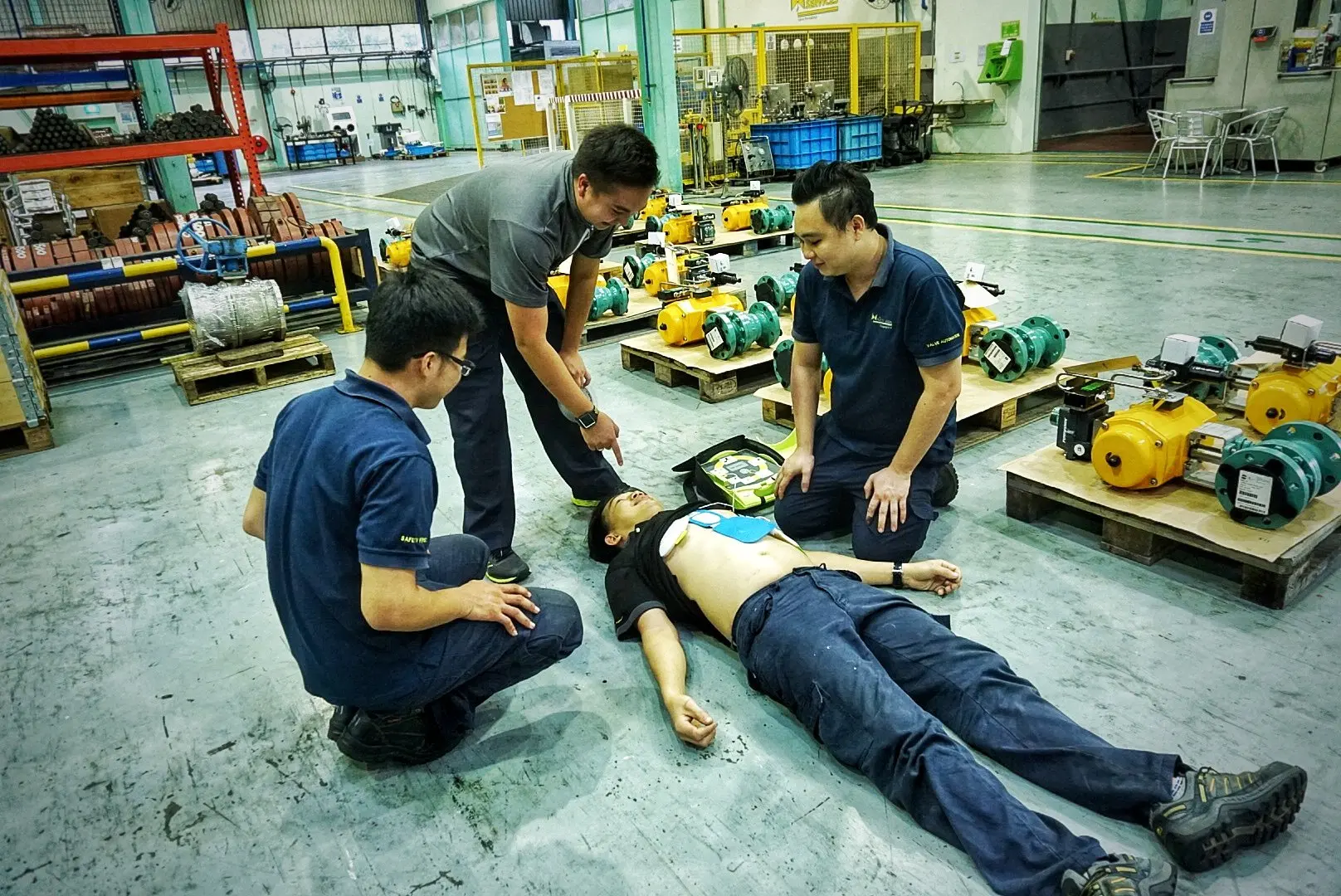
Occupational First Aid
+ AED
$346.62 incl. GST ($318 before GST)
See Details