First Aid Awareness Talks
First Aid Awareness Talks for Companies Singapore
Last updated: 20 August 2026
From 2 hours · online or on site
Awareness session, not a certification
TL;DR: A first aid awareness corporate talk Singapore employers book is a short briefing for a whole team, delivered on site or online. It is an introductory session, not an accredited course: there is no assessment, no certificate and no validity period. It does not satisfy the appointed first-aider duty in the Workplace Safety and Health (First-Aid) Regulations.
First Aid Awareness Talk
Click a card to flip and view key details
Most staff will never be the appointed first-aider. They will still be the person standing closest when a colleague collapses, scalds a hand or slips on a wet floor. An awareness talk is aimed at them.
This page sets out what a first aid awareness corporate talk in Singapore covers, what it deliberately does not do, and where the statutory line sits between an awareness session and an accredited course. Every requirement below is drawn from Singapore legislation and the agencies that publish it.
1
What is a first aid awareness talk?
Quick Answer: A first aid awareness corporate talk in Singapore is a short introductory session covering how to recognise a medical emergency, call for help and act in the first few minutes. It is not accredited by the Singapore Resuscitation and First Aid Council, carries no assessment, and issues no first aid certificate.
The distinction matters because the word “course” gets used loosely. The Singapore Resuscitation and First Aid Council (SRFAC) accredits four basic courses: BCLS+AED, CPR (Hands-Only)+AED, Standard First Aid and Child First Aid. An awareness talk is none of those.
- No certificate is issued. Because there is no accredited syllabus and no assessment, there is nothing to certify and no expiry date to diarise.
- Attendance is the only record. Companies typically keep a sign-in sheet for their safety file rather than a certificate register.
- Group size is flexible. A talk is designed for a whole department or a full shift at once, which an accredited course cannot accommodate in the same way.
- The purpose is recognition, not competence. The aim is that more people know what a medical emergency looks like and what to do in the first minute.
Used honestly, that is a useful layer. Used as a substitute for accredited training, it leaves a company exposed to a legal duty it has not actually met.
Key takeaway: An awareness talk broadens who can react. An accredited course is what makes a named individual a first-aider on paper.
Not sure which one your workplace needs?
The headcount on your payroll usually answers it before anything else does. Compare the accredited first aid courses →
2
Does an awareness talk meet the first-aider requirement?
Quick Answer: No. Regulation 5 of the Workplace Safety and Health (First-Aid) Regulations requires appointed first-aiders to have completed a training course acceptable to the Commissioner. An awareness talk has no accredited syllabus and no assessment, so it cannot support that appointment.
The duty is triggered by headcount, not by industry. Regulation 5(1) of the WSH (First-Aid) Regulations applies where more than 25 persons are employed in a workplace. First-aiders must then be appointed and readily available during working hours, at one first-aider for every 100 persons employed or part thereof.
Three details in the same regulation are routinely missed:
- Shifts are counted separately. Regulation 5(3) applies the same ratio to each shift, so a round-the-clock operation needs cover on every one of them.
- First-aiders keep records. Regulation 5(4) requires each first-aider to maintain a record of all treatment rendered.
- Names go on a notice. Regulation 5(5) requires a notice in the workplace stating who the appointed first-aiders are.
An awareness talk supports none of those obligations. It does something different: it raises the floor for everyone else in the room, so the appointed first-aider is not the only person who knows what is happening. If your organisation needs the appointment itself, that route runs through the Standard First Aid course.
Key takeaway: Past 25 employees the first-aider appointment is a legal requirement with a named person behind it. An awareness talk sits alongside that duty, never in place of it.
3
What actually injures people at Singapore workplaces?
Quick Answer: Slips, trips and falls caused more major injuries than any other incident type in 2025. Together with falls from height and machinery incidents they accounted for 61 per cent of Singapore’s 586 workplace major injuries, which is why an awareness talk leads on bleeding, fractures and head injury.
A talk aimed at the wrong emergencies wastes the hour. The Ministry of Manpower publishes what actually happens, and the answer shapes the running order of any sensible session.
| Cause | 2025 major injuries | 2024 |
|---|---|---|
| Slips, trips and falls | 216 | 207 |
| Falls from height | 78 | 74 |
| Machinery incidents | 66 | 76 |
| Vehicular incidents | 43 | 37 |
| Struck by falling objects | 28 | 36 |
| Caught in or between objects | 26 | 27 |
| Exposure to extreme temperatures | 24 | 27 |
Source: MOM, National Statistics: Workplace Safety and Health Report 2025, Table 4e. Excludes platform workers.
The pattern repeats further down the severity scale. MOM records that slips, trips and falls, machinery incidents and over-exertion accounted for 50 per cent of the 22,090 workplace minor injuries in 2025.
Slips, trips and falls alone produced 216 of Singapore’s 586 workplace major injuries in 2025.
None of this is exotic. It is bleeding, fractures, sprains, burns and the occasional head knock, on ordinary floors during ordinary shifts.
Key takeaway: Build the session around slips, machinery contact and falls before anything rarer. The national figures say that is where your staff will actually be standing when something happens.
4
What does the law require, by headcount?
Quick Answer: Every workplace needs first-aid boxes. Above 25 employees you need appointed first-aiders at one per 100. Above 500 persons at work you need a first-aid room approved by the Commissioner. Under the WSH (First-Aid) Regulations, failure to comply carries a fine of up to $20,000, or up to $50,000 for a repeat offender.
The table below is the whole of the employer duty in one view, taken directly from the regulations rather than from summaries of them.
| Trigger | What is required | Regulation |
|---|---|---|
| Every workplace | A sufficient number of first-aid boxes, one lot per floor where the workplace sits in a building, each maintained, checked and under a named person’s charge | Reg 4 |
| More than 25 employed | Appointed first-aiders readily available during working hours, at one per 100 persons employed or part thereof | Reg 5(1) |
| Any first-aider appointed | Successful completion of a training course acceptable to the Commissioner, plus re-training as required | Reg 5(2) |
| Shift work | The same ratio applied to each shift’s headcount | Reg 5(3) |
| More than 500 at work | A first-aid room of a standard approved by the Commissioner, unless otherwise permitted in writing | Reg 6 |
| Toxic or corrosive substances present | Suitable facilities for quick drenching or flushing of the eyes and body, within the work area | Reg 7(2) |
| Non-compliance by the occupier | Fine up to $20,000 or imprisonment up to 2 years, or both; up to $50,000 for a repeat offender | Reg 8(1) |
Source: Workplace Safety and Health (First-Aid) Regulations (Rg 4), Singapore Statutes Online. Amounts in SGD.
Read down the middle column and one thing stands out: the law regulates equipment, ratios and rooms. It says nothing about how the other 90 people in the building would cope. That gap is where an awareness talk sits.
Key takeaway: Compliance is a headcount calculation. Preparedness is a culture question. The regulations settle the first, and only the first.
5
What does a first aid awareness talk cover?
Quick Answer: A first aid awareness corporate talk in Singapore covers the common workplace medical emergencies, the primary and secondary survey, the F.A.S.T. stroke signs and the sequence for responding to a casualty. The Ministry of Manpower publishes the same content set through its SGSecure workplace resources.
MOM’s SGSecure first aid guidance lists the emergencies worth briefing a workforce on: fainting, heat injuries, burns, bleeding, sprains, fractures and dislocations, stroke, fits and seizures, and cardiac arrest.
Three memory aids carry most of the session.
- DRSABC, the primary survey. Danger, response, shout for help, AED, breathing, chest compressions.
- SAMPLE, the secondary survey. Signs and symptoms, allergies, medications, past medical history, last meal, and events leading up to the injury.
- F.A.S.T., for suspected stroke. Facial drooping, arms weakness, speech difficulties, time to call emergency.
How to respond to a casualty
MOM sets out seven steps for anyone who finds a collapsed colleague. They are worth rehearsing out loud, because under pressure people skip straight to the middle.
- Check surroundings for danger. A second casualty helps nobody, and the hazard that caused the first injury is usually still live.
- Approach the casualty. Establish whether they respond to you at all.
- Call 995 and give your location. A unit number and building name saves more time than any other single detail.
- Stay on the phone with SCDF. The dispatcher coaches you through what happens next.
- Observe the casualty. Breathing, bleeding, responsiveness — report what you see rather than what you conclude.
- Start CPR. Follow the dispatcher’s instructions on compressions.
- Use the AED. Send a second person to fetch it while you stay with the casualty.
An awareness talk walks a room through that sequence. It does not assess whether each attendee can perform it to a graded standard, and that is the difference between a talk and a course.
Key takeaway: The content of a talk is public, and MOM publishes most of it. What a session adds is a trained instructor working through it with your team, in your building, against your hazards.
6
On site or online: which format suits your team?
Quick Answer: Online delivery suits distributed teams, multi-site companies and office populations who need recognition and escalation knowledge. On-site delivery suits operational teams, because the instructor can walk the actual floor, point at the actual AED and use the company’s own first-aid box.
Neither format changes the standing of the session. Online or in a meeting room, an awareness talk remains non-accredited and non-certifiable. What changes is how much of your own environment can be worked into the hour.
- Online works for scale. A single session can reach several sites, remote staff and shift workers dialling in from home, without travel time.
- On site works for specifics. The instructor can locate your AED, check your first-aid box and reference the stairwell where people actually fall.
- Hands-on skill still needs a room. Compressions and AED pad placement are physical skills, and no online session can assess them.
- Mixed populations often need both. An online briefing for head office, an on-site session for the warehouse.
If your reason for booking is that a named person must appear on the first-aider notice, format is not the question you are actually asking — accreditation is.
Key takeaway: Choose online for reach and on site for realism. Choose an accredited course when the outcome you need is a certificate.
Planning a session across several sites?
Send us your headcount, sites and preferred format and we will map the schedule around your shifts. Arrange a corporate awareness talk →
7
Why cardiac arrest gets a section of its own
Quick Answer: SCDF reports that more than 2,500 people in Singapore suffer an out-of-hospital cardiac arrest, with a survival rate of just 5 per cent, which simple intervention in the first few minutes could improve. Bystander action is the variable, and an awareness talk is aimed squarely at bystanders.
Cardiac arrest is the one workplace emergency where the response window is shorter than the ambulance journey. That is the reasoning behind Singapore’s community response system, described on SCDF’s myResponder page.
- Alerts go to nearby volunteers. myResponder notifies Community First Responders of nearby suspected cardiac arrest cases.
- The app locates AEDs. It shows nearby automated external defibrillators, which is the step most people cannot complete from memory.
- The 995 button shares your location. Calling through the app sends geolocation to SCDF’s 995 Operations Centre, so resources are dispatched sooner.
- Handover matters. Responders continue until SCDF paramedics arrive and take over the case.
An awareness session is where most staff first hear that any of this exists. Companies that also run events or higher-risk operations sometimes pair training with on-site medical cover, which is a separate service from licensed ambulance and event medical support.
Key takeaway: For cardiac arrest, the useful outcome of an awareness talk is not skill but speed — someone calls 995 sooner, and someone else goes for the AED without being told.
8
When your company needs an accredited course instead
Quick Answer: Book an accredited course when you need a named first-aider on the workplace notice, when an existing certificate is close to expiry, or when a client or contract requires certified personnel on site. Book an awareness talk when the goal is broad familiarity across a whole team.
Three situations point clearly to a certifiable course rather than a talk.
- You employ more than 25 people. Regulation 5 applies, and the appointment must be backed by a course acceptable to the Commissioner.
- A certificate is expiring. Renewal runs through the relevant refresher, such as the Standard First Aid refresher course, which shortens the classroom time for holders of a current certificate.
- A contract specifies certified cover. Main contractors and building owners frequently ask for certificate numbers, and an attendance list will not satisfy them.
The two are not competing purchases. A common pattern is one accredited cohort to satisfy the appointment, and an annual awareness talk for everyone else so the certified staff are not working alone.
Key takeaway: If anyone will ever ask to see a certificate, you need a course. If the aim is that more people react well, you need a talk.
9
Inside Medlink’s first aid awareness talks
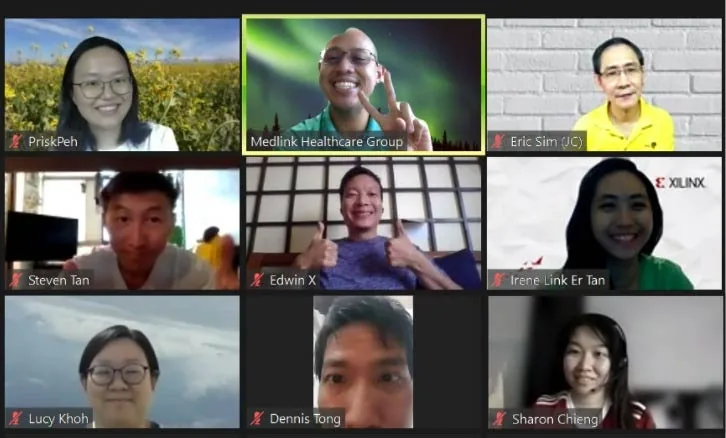
Quick Answer: Medlink builds every awareness talk from a one-hour base module, then adds one hour per industry module. Sessions run on Zoom or at your premises, for up to 20 participants, in English or Mandarin, from a minimum of two hours.
The base module is the same for everyone. What gets added depends on the room:
- Base module, one hour, for everyone. CPR + AED; foreign body airway obstruction; common medical emergencies, including identifying stroke by the FAST method, heart attack and diabetic patients; and minor traumatic injuries such as cuts, bruises and minor burns.
- Tuition, childcare, child caregivers and confinement nannies. Infant and paediatric emergencies: asthma, allergic reaction, fits, child choking and child abuse.
- Office workers. First aid for the office: identifying common office hazards, the contents of a first aid box, and recognising stress and burnout.
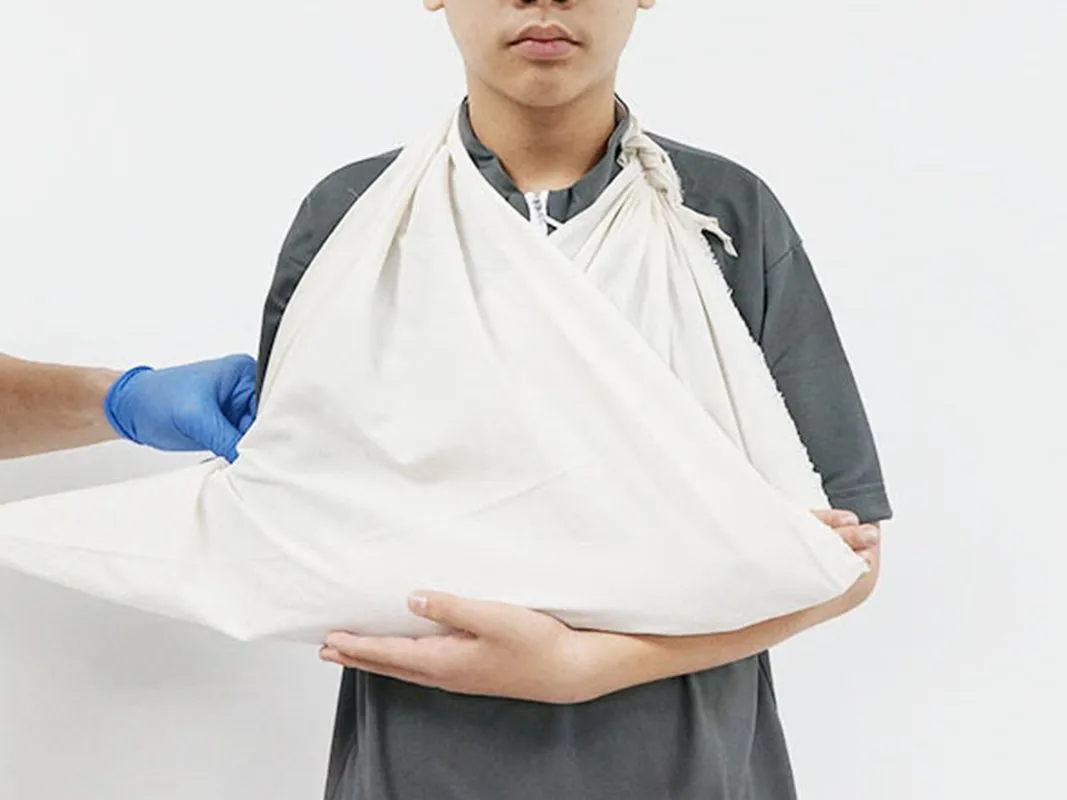
- F&B, hotel and transport frontliners. First aid for hospitality: improvised tourniquets; neck, spinal and head injuries from falling objects and slips; and preventive measures for burns, slips, trips and falls, including proper lifting technique.
- Industrial and construction workers. First aid for industry: identifying workplace hazards; improvised tourniquets; neck, spinal and head injuries from falling objects and falls from height; and bandaging major wounds and fractures.
Entry requirements and health notes. There are no entry requirements and no assessment, because there is no certification to award. Attendance can be recorded so the session sits in your own training file.
| Component | Requirement |
|---|---|
| Base module | 1 hour, suitable for everyone |
| Each industry module | Additional 1 hour |
| Minimum booking | 2 hours, subject to the topics selected |
| Format | Online (Zoom) or in-person at your premises |
| Group size | Up to 20 participants |
| Language | English or Mandarin |
| Rate | $381.50 incl. GST ($350 before GST), per hour |
Source: Medlink Healthcare Group, First Aid Awareness Talks course page, read 23 September 2026.
Key takeaway: The modular build is the useful part: a two-hour booking is the base module plus the one industry module that matches your team, not a generic talk.
10
How to arrange a talk with Medlink
Quick Answer: Four details settle the booking: how many people will attend, whether the session runs on site or online, which hazards your operation carries, and your preferred date. Fees are quoted in SGD, inclusive of GST.
Send those four and the session can be shaped around your workplace rather than delivered from a generic deck.
- Confirm the headcount and the audience. An office population and a workshop crew need different worked examples.
- Choose the delivery format. On site for operational teams, online where staff are spread across locations.
- Flag your hazards. Hot surfaces, machinery, chemicals, working at height or lone working all change the emphasis.
- Give two possible dates. Shift patterns usually decide the slot more than the calendar does.
Medlink Healthcare Group is a Singapore healthcare group providing SRFAC-accredited first aid training alongside industrial paramedicine and HCSA-licensed ambulance services. The full course range is on the Medlink Healthcare Group website, and enquiries go through the contact page.
Key takeaway: Headcount, format, hazards and date. Those four answers are enough to schedule a session and quote it.
11
Conclusion: an awareness layer, honestly labelled
A first aid awareness corporate talk Singapore companies run is a broad, short, non-certifiable session. It does not make anyone a first-aider under the WSH (First-Aid) Regulations, and it should never be sold as though it does.
What it does is narrow the gap between an incident and a sensible first response, across a whole team rather than one or two appointed people. Given that slips, trips and falls alone caused 216 major injuries in 2025, that gap is worth narrowing.
If your headcount has passed 25, start with the Standard First Aid course and treat the awareness talk as the layer you add on top.
12
Frequently asked questions
No. An awareness talk is not one of the four courses SRFAC accredits, so there is no assessment, no certificate and no validity period. Companies usually keep an attendance list for their safety records instead.
No. Regulation 5(2) of the WSH (First-Aid) Regulations requires an appointed first-aider to have completed a training course acceptable to the Commissioner. That appointment must rest on an accredited course.
Under the WSH (First-Aid) Regulations, where more than 25 persons are employed in a workplace, the ratio is one first-aider for every 100 persons employed or part thereof, and the same ratio applies to each shift where shift work is run.
Yes. Online delivery suits distributed teams and multi-site companies. It covers recognition, escalation and the response sequence, but physical skills such as chest compressions cannot be assessed remotely.
Length is set with the client rather than by an accrediting body, because the session is not certifiable. It is usually scheduled around a shift handover, a safety time-out or a company health event.
Not on its own. Machinery incidents caused 66 major injuries in Singapore in 2025, and those workplaces almost always sit above the 25-employee threshold that requires appointed, accredited first-aiders.
Booking a first aid awareness talk for your team?
Tell us your headcount, your sites and whether you want the session on site or online. We will confirm availability, shape the content around your hazards and quote in SGD inclusive of GST.
More From Medlink
Popular first aid courses
Explore other SRFAC and SWDA-accredited courses run by our team, from infant care to workplace certification.
Standard First Aid
+ AED
$196.20 incl. GST ($180 before GST)
See Details
Basic First Aid
+ AED
$141.70 incl. GST ($130 before GST)
See Details
Occupational First Aid
+ AED
$346.62 incl. GST ($318 before GST)
See Details