Medical Equipment & Supplies
Medical Equipment & Supplies Singapore
Last updated: 24 September 2026
Singapore-wide delivery
Clinics · Homes · Offices · Schools
TL;DR: Buying medical equipment & supplies Singapore clinics, homes, offices and schools need usually means three suppliers. Medlink does it in one: hospital beds, wheelchairs, walking aids, oxygen concentrators, AED cabinets, first aid kits and workplace emergency supplies, island-wide, with delivery, rental, warranty and installation quoted together.
What we supply
Four groups of equipment, delivered and installed island-wide
Hospital beds and home equipment
No-Frill, Foldable and Swivel beds, delivered, installed and available for rental.
See detailsMobility and oxygen
Wheelchairs, walking aids and oxygen concentrators, with SMF and ATF subsidy explained.
See detailsWorkplace first aid and PPE
First aid boxes, PPE and emergency supplies, set against what the Regulations require.
See detailsAED cabinets and signage
Free-standing and wall-mounted cabinets, each with a 3D AED sign and the SCDF CPR poster.
See details
1
What medical equipment and supplies cover in Singapore
Most equipment orders in healthcare fail at the same point. Not the product — everything around it. A bed arrives without a delivery slot anyone can meet, a first aid box is bought once and never restocked, an AED goes on a wall with no cabinet or signage.
This page sets out what medical equipment & supplies Singapore organisations can rely on looks like in practice: what we sell, who buys it, what the law asks of you, what it costs, and how delivery works. Every regulation and figure below links to its source at the Singapore Government, MOH or HSA. Prices come from Medlink’s own supply list.
Quick Answer: Medical equipment & supplies Singapore buyers order falls into three ranges: home and clinical equipment, workplace first aid and PPE, and resuscitation equipment. Medlink supplies all three, with delivery, installation, rental and warranty quoted as part of the same order.
Start with what is actually on the list. Three ranges, bought by different people for different reasons:
- Home and clinical equipment. Hospital beds, wheelchairs, walking aids and oxygen concentrators. Usually bought or rented around a hospital discharge, and often subsidised.
- Workplace first aid and PPE. First aid boxes and refills, PPE and emergency supplies. Bought to meet a legal duty, and restocked rather than bought once.
- Resuscitation equipment. AED cabinets, 3D signage and E-Trolleys. Bought so that a device already on site can be found and used in the ninety seconds that decide the outcome.
What Medlink adds is the part after the product. Delivery slot, installation, rental option, warranty, and a straight answer on whether a subsidy applies — quoted together rather than discovered afterwards. The team behind our accredited first aid courses and our ambulance service supplies the same equipment those services use daily.
This equipment is regulated. Hospital beds, wheelchairs, AEDs and oxygen concentrators are medical devices under the Health Products Act, and the Health Sciences Authority requires a dealer’s licence to manufacture, import or wholesale them. Class A devices, where most beds and wheelchairs sit, are exempt from product registration but still fall under that regime. Ask any supplier where their equipment comes from.
Key takeaway: Compare suppliers on the whole order — delivery, installation, warranty and subsidy — not on the line item price.
Need equipment for a specific site?
Tell us the setting and the headcount and we will come back with a list and a price. Ask for an equipment quotation →
2
Who we supply, and what each setting usually orders
Quick Answer: Medlink supplies four settings across Singapore: clinics and healthcare institutions, homes, offices and schools. Each buys a different half of the catalogue, and the delivery requirements differ more than the products do.
Four buyers, four different orders:
- Clinics and healthcare institutions. Beds, mobility aids, oxygen concentrators and resuscitation supply. Usually repeat orders against a known list.
- Homes. One bed, wheelchair or walking aid, often needed within days of a discharge. Rental is common, and subsidy matters.
- Offices. First aid boxes, AED cabinets, signage and PPE, bought to meet a legal duty rather than a clinical one.
- Schools. The same workplace supplies, plus higher first aid box turnover and a stronger case for accessible AEDs.
A home order and an office order look nothing alike. One is a single item, one lift, one time window. The other is many small items across floors, and it repeats. Both are covered island-wide, and both are quoted with delivery in the price rather than added after. Households arranging care after a discharge often pair equipment with medical transport on the same day.
Key takeaway: Give the setting before the product list. It decides delivery, installation and whether rental beats purchase.
3
Why home medical equipment demand keeps rising in Singapore
Quick Answer: Singapore gained roughly 35,700 residents aged 65 and over in a single year, and the old-age support ratio fell from 3.5 to 3.3. Fewer working-age people are available per senior, which is why more care happens at home, and why home equipment demand keeps rising.
One year of official statistics explains the demand better than any forecast.
| Indicator | 2024 | 2025 | What it means for equipment |
|---|---|---|---|
| Residents aged 65 and over | 753,900 | 789,600 | 35,700 more seniors in one year |
| Citizens aged 65 and over | 19.9% | 20.7% | One citizen in five is 65 or older |
| Median age of residents | 42.8 years | 43.2 years | The whole population is shifting |
| Old-age support ratio | 3.5 | 3.3 | Fewer working-age people per senior |
Source: Singapore Department of Statistics, elderly profile latest data (2025). The old-age support ratio is residents aged 20 to 64 per resident aged 65 and over.
Read the last row again: the old-age support ratio fell from 3.5 to 3.3. That is the number behind the orders: with fewer hands at home, a height-adjustable bed and a decent wheelchair stop being comforts and become what makes home care possible.
Key takeaway: Home equipment demand is not a trend. It tracks a support ratio that keeps falling.
4
Hospital beds: which of the three you actually need
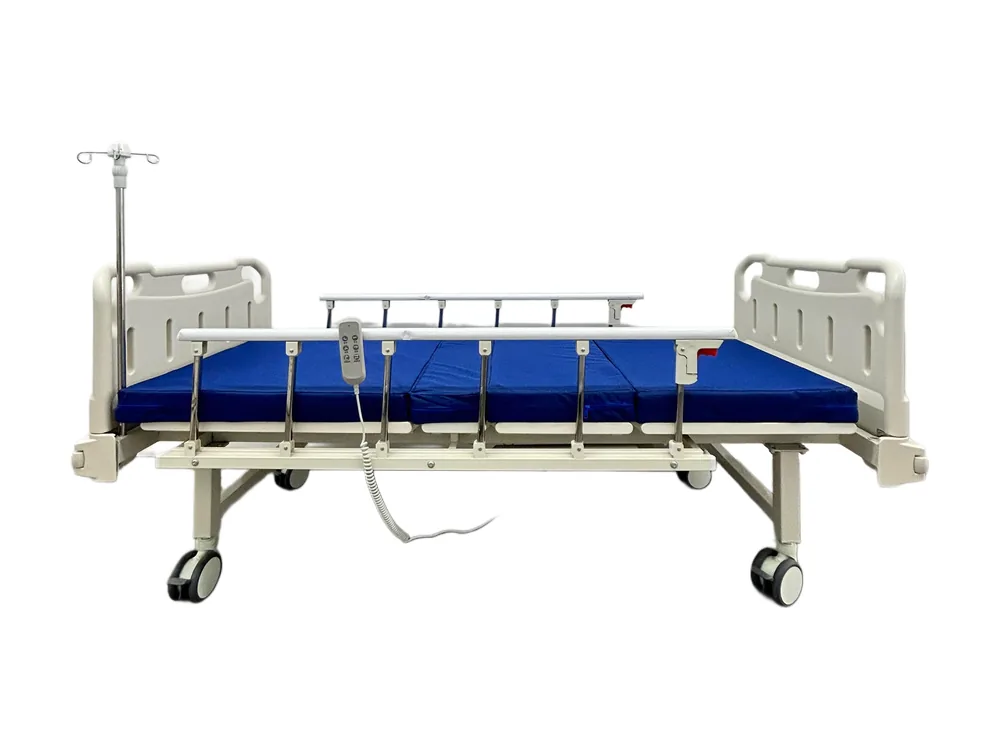
Quick Answer: Medlink supplies three hospital beds — No-Frill, Foldable and Swivel. All three are remote controlled and have back and leg rest adjustment. They differ on height adjustment, Trendelenburg tilt and whether the bed rotates, and those three differences decide the choice.
The bed is the largest item in most home orders, and the one people get wrong. Compare on what the carer does daily, not on the spec sheet.
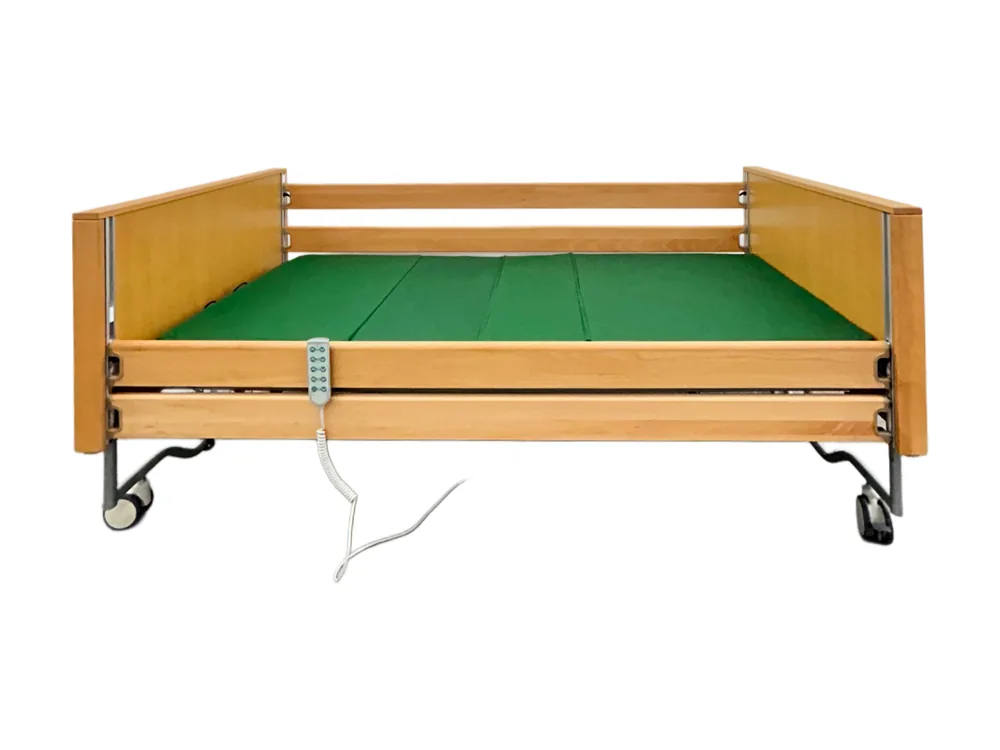
Entry
No-Frill Bed
$980Selling price, includes 1 mattress
- Remote control, back and leg rest
- Height non-adjustable
- Rental $150 for 2 weeks, $200 for 4 weeks
Mid
Foldable Bed
$2,949Selling price · pre-order $2,359.20
- Includes 1 mattress
- Height 50 cm to 80 cm by remote
- Trendelenburg tilt
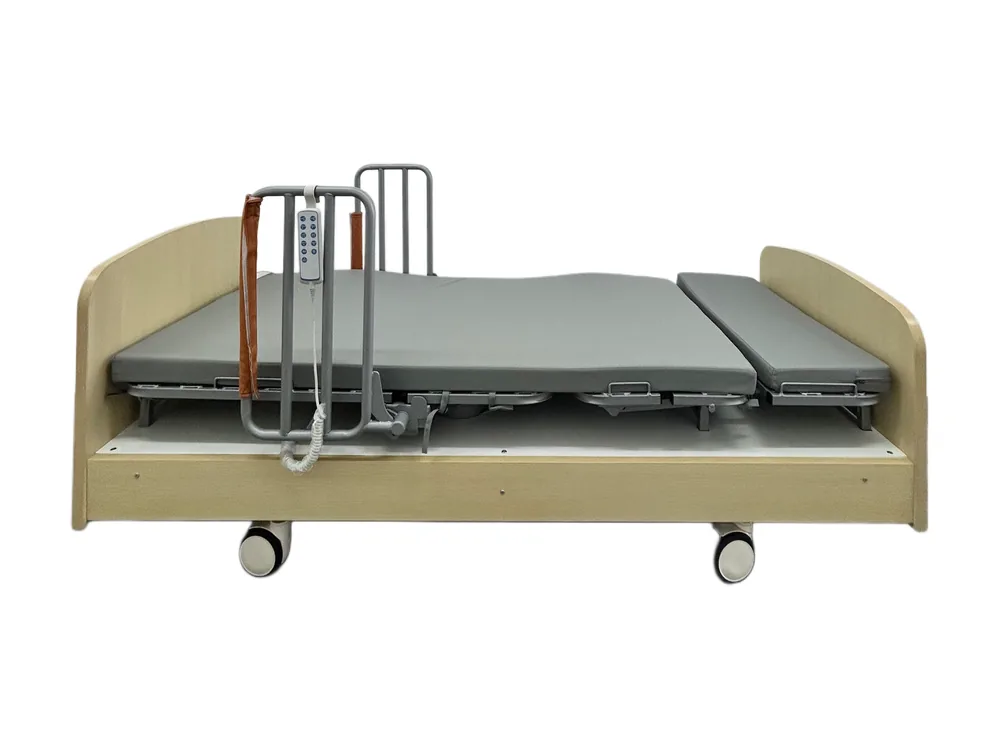
Full feature
Swivel Bed
$5,189Selling price · pre-order $4,151.20
- Includes 1 mattress
- Height 50 cm to 80 cm by remote
- Rotates 360° by remote
- Trendelenburg tilt
| Feature | No-Frill bed | Foldable bed | Swivel bed |
|---|---|---|---|
| Adjustment mode | Remote control | Remote control | Remote control |
| Height adjustment | Non-adjustable | 50 to 80 cm | 50 to 80 cm, plus 360° rotation |
| Back and leg rest | Yes | Yes | Yes |
| Trendelenburg tilt | No | Yes | Yes |
| Selling price | $980 | $2,949, or $2,359.20 on pre-order | $5,189, or $4,151.20 on pre-order |
Source: Medlink Healthcare Group supply list and price list. All three beds include one mattress and a one-year warranty; an extended warranty is 10% of the selling price per year. The No-Frill bed is also available for rental at $150 for two weeks or $200 for four weeks. Prices are subject to change; confirm on enquiry.
Height adjustment is what saves a carer’s back, so it is worth paying for when one person does transfers alone. Trendelenburg tilt is a clinical need, not a comfort feature. The 360° rotation earns its cost in a tight bedroom, where the bed has to turn to reach a chair or commode.
Key takeaway: Buy the bed for the daily transfer, not the feature list.
5
What the law asks of a Singapore workplace, by headcount
Quick Answer: Every workplace in Singapore must provide a sufficient number of first-aid boxes, on every floor. Above 25 persons employed, first-aiders must be appointed at one per 100. Above 500 persons at work, a first-aid room is required. Hospitals and medical clinics are excluded.
The Workplace Safety and Health (First-Aid) Regulations are short, specific and enforced. The ladder in full:
| Headcount | What is required | Regulation | What you have to buy |
|---|---|---|---|
| Every workplace | Sufficient first-aid boxes, and sufficient on each floor, kept equipped, maintained, accessible and under a named person | Reg 4 | Boxes per floor, plus a restocking routine |
| More than 25 employed | First-aiders appointed and readily available during working hours, at one per 100 or part thereof, named on a notice | Reg 5(1), 5(5) | Trained first-aiders and their kit |
| Shift work | The same ratio has to hold on every shift | Reg 5(3) | More first-aiders than headcount alone suggests |
| More than 500 at work | A first-aid room to a standard approved by the Commissioner | Reg 6 | Room fit-out and stock |
| Exposure to toxic or corrosive substances | Quick drenching or flushing of eyes and body, within the work area | Reg 7(2) | Eyewash and emergency shower |
Source: Workplace Safety and Health (First-Aid) Regulations, Singapore Statutes Online, current version. Failure to comply is an offence carrying a fine of up to $20,000 or imprisonment of up to 2 years, rising to $50,000 for a repeat offender (reg 8). The Regulations do not apply to hospitals or medical clinics (reg 3).
Two things catch employers out. Boxes are required per floor, not per company, so a firm of 20 people over three floors needs more than one. And maintenance is a continuing duty — a box bought once and never opened fails as surely as no box at all.
The first-aider requirement is a training one, not a supply one. If you are short, our Standard First Aid course is the usual route to an appointed workplace first aider, and Occupational First Aid is the one for higher-risk industrial sites.
Key takeaway: Count floors and shifts, not just employees. Both multiply what the Regulations require.
Not sure your workplace would pass an inspection?
Send us your floor count, headcount and shift pattern, and we will tell you what is missing. Get a workplace supplies list →
6
AED cabinets and signage: what Singapore has, and what you need
Quick Answer: AEDs are not legally compulsory in private or public buildings in Singapore, and the Government has said it does not assess a need to mandate them. What matters instead is that an AED can be found in seconds — a cabinet, signage and registry problem.
Start with the honest position, because some suppliers imply otherwise. In a written reply to Parliament the Minister for Home Affairs stated that the Government does not assess a need to make AED installation mandatory. Nobody will fine you for not having one. What has happened instead is national deployment.
| Measure | Official figure | Source and date |
|---|---|---|
| AEDs deployed under Save-A-Life | Over 5,000 by end-2025 | MHA parliamentary reply, 4 Feb 2026 |
| Times those AEDs have been used | More than 4,500 | MHA parliamentary reply, 4 Feb 2026 |
| HDB coverage | Lift lobbies of HDB blocks in all 89 constituencies | MHA written reply on AEDs |
| Mandatory in private or public buildings? | No — no need assessed to mandate | MHA written reply on AEDs |
Sources: Ministry of Home Affairs written replies to parliamentary questions, on the effectiveness of the Save-A-Life initiative and on AEDs at private buildings, public buildings and in public areas. Figures are as stated in those replies.
Over 5,000 units and more than 4,500 uses is the whole argument for the cabinet. An AED nobody can locate in the ninety seconds that matter is a device in an office, not a public-access AED. So every cabinet we supply includes a 3D AED sign and the SCDF CPR poster. A publicly accessible AED should also be registered, so it appears in SCDF’s myResponder app; that is handled through the Singapore Heart Foundation. Staff who will use it should hold a current CPR and AED certificate.
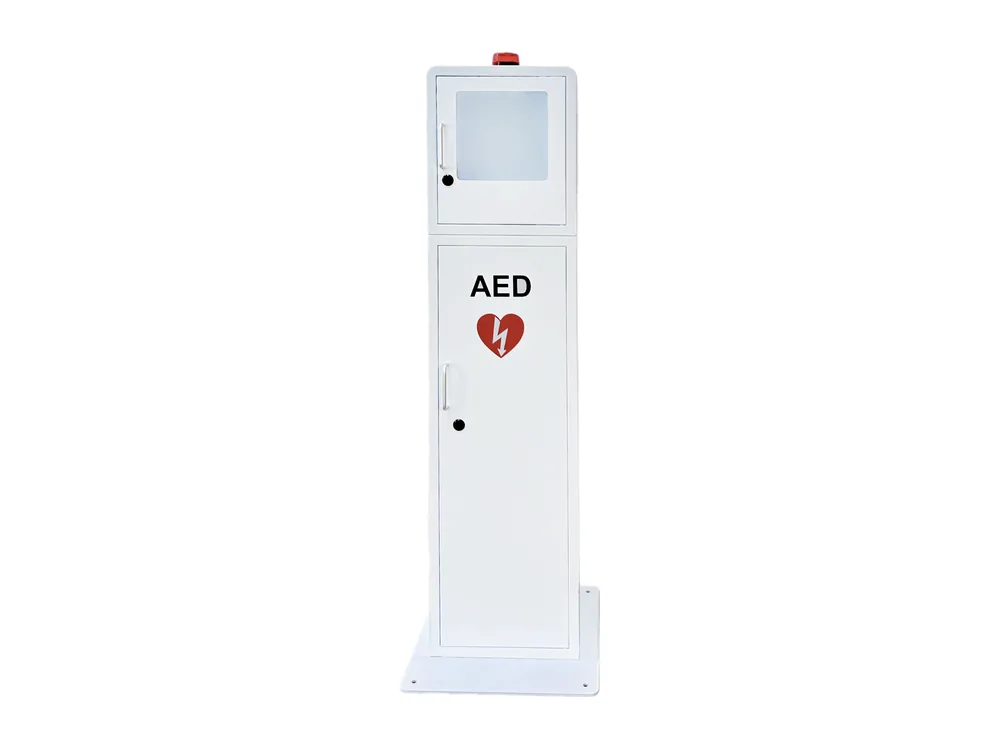
Free Standing AED Cabinet
$880Selling price
- Includes 3D AED sign and SCDF CPR poster
- Alarmed door with viewing window
- Bolts to the floor, no wall needed
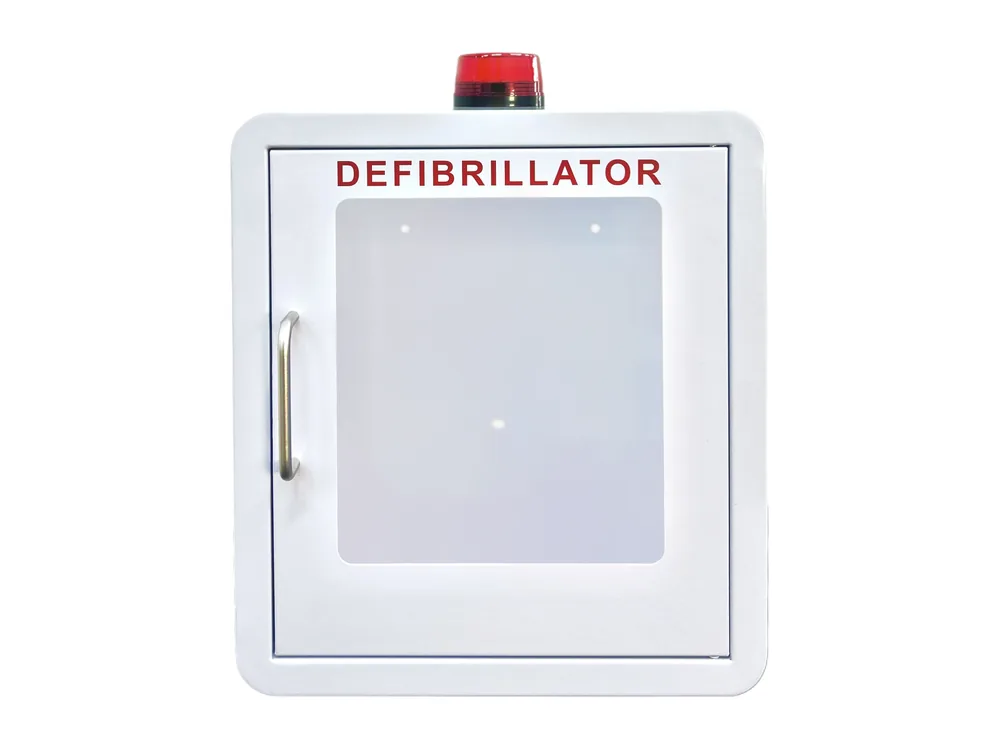
Wall Mounted AED Cabinet
$300Selling price
- Includes 3D AED sign and SCDF CPR poster
- Alarmed door with viewing window
- For corridors and lift lobbies
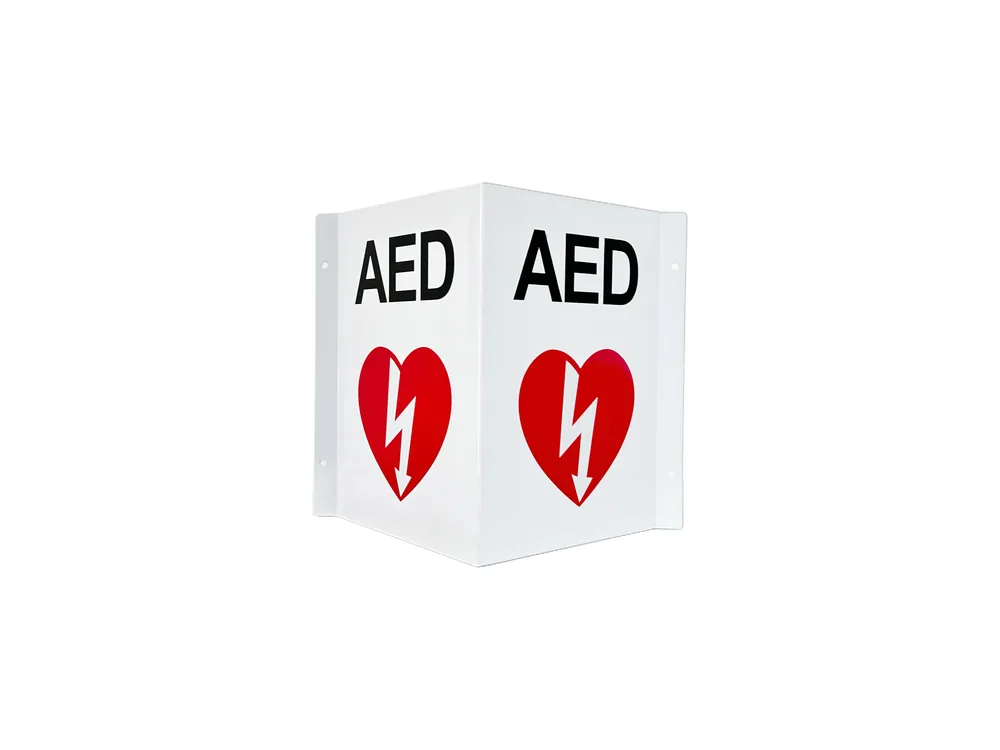
3D Style AED Sign
$20Selling price
- Projects from the wall, readable from both directions
- Already included with either cabinet
- Buy separately for an AED you already own
Key takeaway: No law requires an AED. Findability is the point of the spend: cabinet, sign, registry entry, trained staff.
7
Equipment prices, delivery and warranty
Quick Answer: Hospital beds are $980 for the No-Frill, $2,949 for the Foldable and $5,189 for the Swivel, each with one mattress. AED cabinets run from $20 for signage to $880 for the free-standing cabinet. E-Trolleys are $550 and $500, tables $50. Rental bed delivery is $150 within 24 hours or $300 express within 6 hours, both ways, with a $100 deposit on the bed. All prices are before GST.
Published prices, so you can budget before you enquire. Wheelchairs, walking aids, oxygen and other mobility equipment are quoted on request, for purchase or rental.
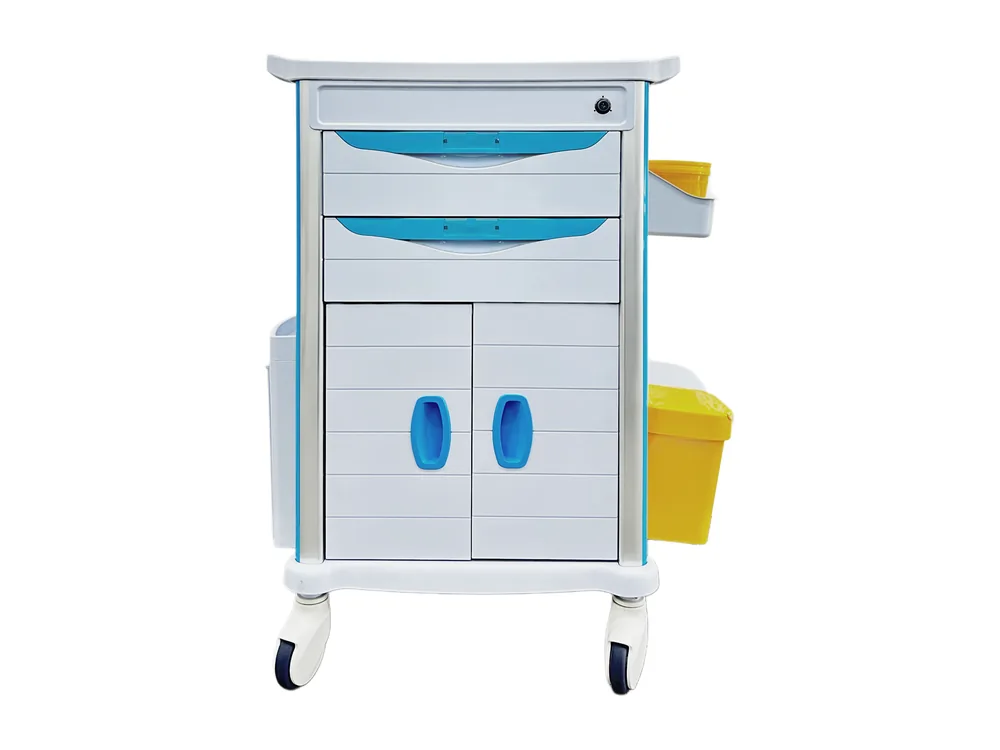
E-Trolley with Cabinet
$500Selling price
- Two drawers plus lockable cabinet
- Sharps bin and waste bin on the side
- 1 warranty free. No pre-order or rental
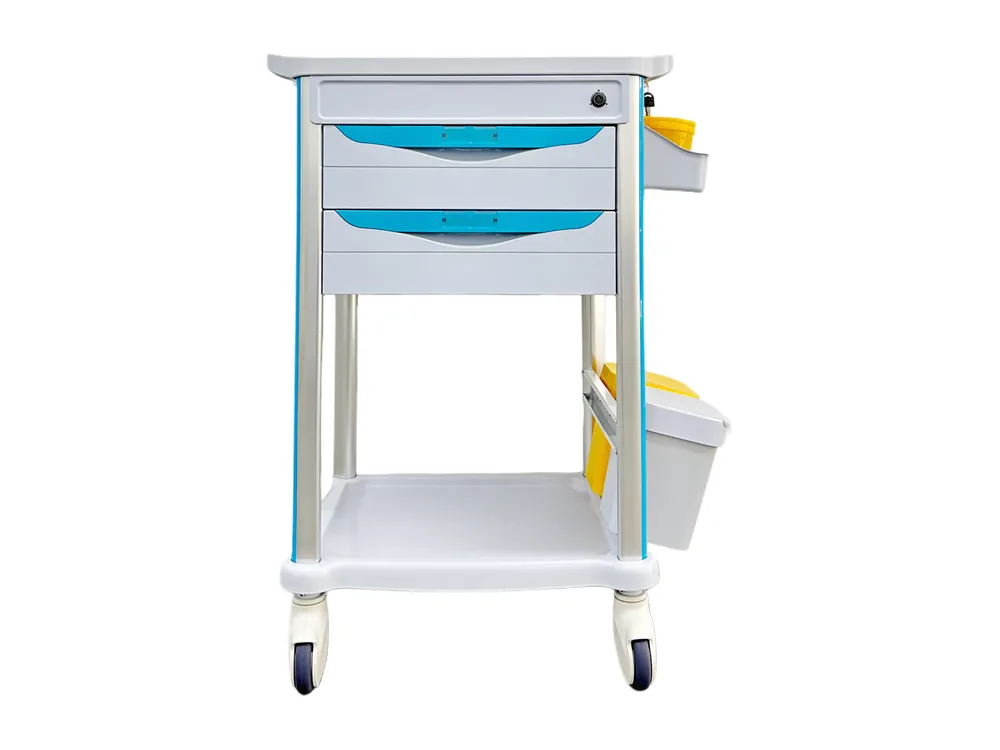
E-Trolley without Cabinet
$550Selling price
- Two drawers plus open lower shelf
- Sharps bin and waste bin on the side
- 1 warranty free. No pre-order or rental
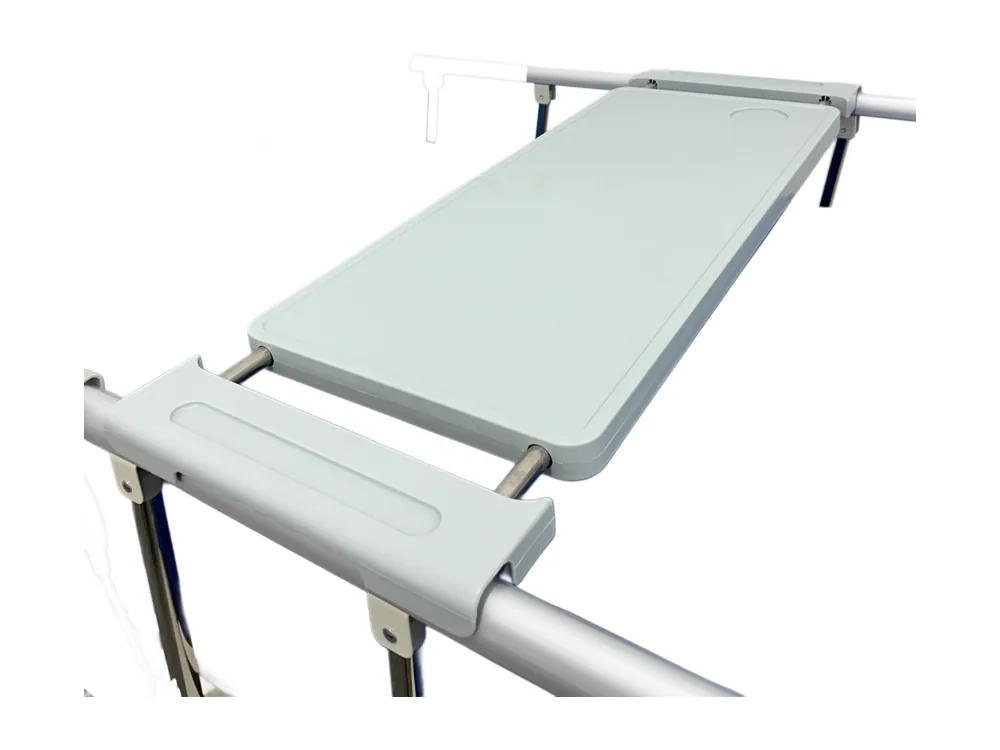
Overbed Table
$50Selling price
- Mounts on the bed side rail
- 1 warranty free, extended at 10% of price
- No pre-order or rental
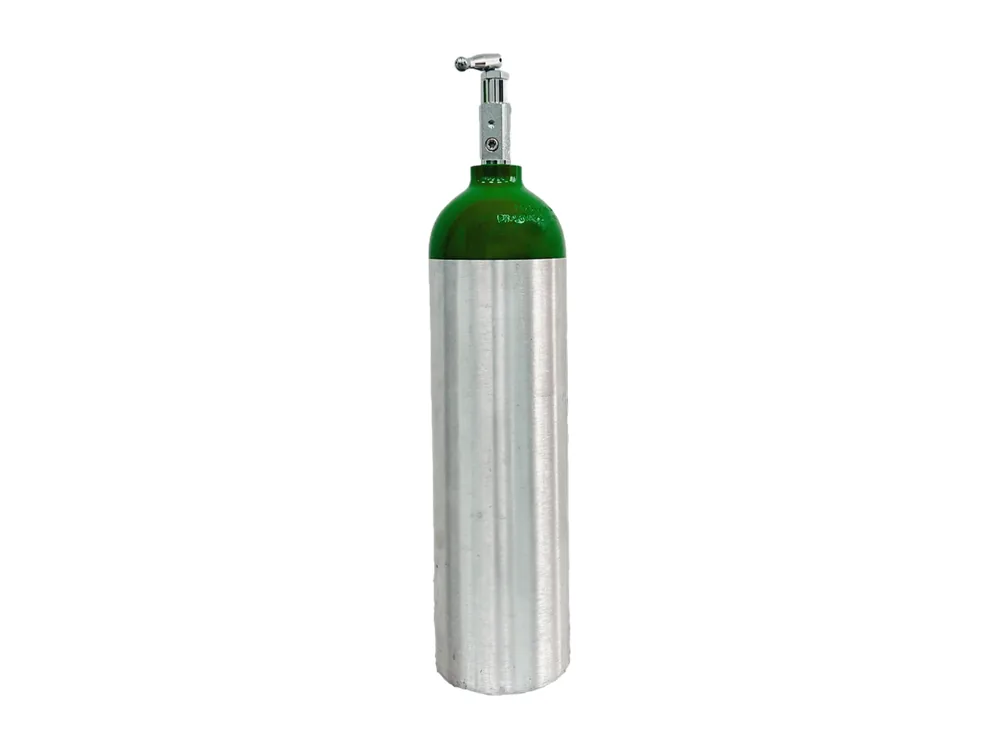
Medical Oxygen Cylinder
On requestPurchase or rental
- Aluminium cylinder, medical oxygen
- Supplied with regulator
- Quoted on enquiry
| Item | Price | Included or noted |
|---|---|---|
| No-Frill Bed | $980 | 1 mattress included. Rental $150 for 2 weeks, $200 for 4 weeks |
| Foldable Bed | $2,949 | 1 mattress included. Pre-order $2,359.20 |
| Swivel Bed | $5,189 | 1 mattress included. Pre-order $4,151.20 |
| Free Standing AED Cabinet | $880 | Sign and poster included |
| Wall Mounted AED Cabinet | $300 | Sign and poster included |
| 3D Style AED Sign | $20 | Already included with either cabinet |
| E-Trolley without cabinet | $550 | 1 warranty free. No pre-order or rental |
| E-Trolley with cabinet | $500 | 1 warranty free. No pre-order or rental |
| Overbed Table | $50 | 1 warranty free. Extended at 10% of price |
| Rental bed delivery, both ways, within 24 hours | $150 | Delivery and collection |
| Express delivery, both ways, within 6 hours | $300 | For same-day discharges |
| Rental bed deposit | $100 | Refundable on return |
Source: Medlink Healthcare Group price list. All prices are quoted before GST. Both AED cabinets include a 3D AED sign and the SCDF CPR poster. Beds and tables carry a one-year warranty, extendable at 10% of the selling price per year; E-Trolleys carry the one-year warranty but no extension. Prices subject to change; confirm on enquiry. Wheelchairs, walking aids and oxygen are quoted on request.
The express option is worth understanding before you need it. A 6-hour delivery exists because discharges are not scheduled around suppliers: a bed confirmed at noon has to be in the flat before the patient is.
Key takeaway: Price delivery and GST with the equipment. On a rental bed, delivery and deposit are a real part of the first bill.
8
Subsidies: what SMF and ATF cover, and how to claim
Quick Answer: Two government funds subsidise assistive devices in Singapore. The Seniors’ Mobility and Enabling Fund covers those aged 60 and above, the Assistive Technology Fund those under 60. Both are means-tested and fund up to 90% of an approved device.
Hospital beds, wheelchairs, walking aids, commodes and pressure relief mattresses are all on the covered list, so ask about subsidy before you buy.
| Seniors’ Mobility and Enabling Fund (SMF) | Assistive Technology Fund (ATF) | |
|---|---|---|
| Who it is for | Seniors aged 60 and above | Persons with disabilities under 60 |
| Means test | Household income per person of $4,800 or less, or property annual value under $21,000 where there is no income | Means-tested on the same basis |
| Subsidy tiers | 90% at per capita household income of $1,200 or below; 75% from $1,201 to $2,000; lower above that | Per capita household income of $801 to $2,000 receives a subsidy level similar to SMF |
| Maximum | Up to 90% of the cost, or the device cap, whichever is lower | Up to 90% of the device cost |
| Devices covered | Walking aids, wheelchairs, commodes, hospital beds, pressure relief cushions and mattresses, hearing aids, customised devices | Assistive technology devices on the approved list |
| How to apply | Assessment by an approved healthcare professional, then apply through AIC | Same route |
Sources: Agency for Integrated Care, Seniors’ Mobility and Enabling Fund; Ministry of Health media release, 17 January 2022, on enhancements to both funds effective 14 February 2022.
Two practical points. The age split between the two funds has applied since February 2022, so someone who started on ATF before 60 stays on ATF. And assessment comes first: a device bought beforehand is harder to claim for. Start at the Agency for Integrated Care, or ask the therapist or medical social worker at the hospital handling the discharge. One thing to know before you ask us for a quote: Medlink is not an AIC-appointed supplier, so a subsidised purchase has to be made through one. We quote for outright purchase and for rental, and we will say so up front rather than let you find out at the claim stage.
Key takeaway: Ask about subsidy before you buy, not after. Assessment first is what makes a claim possible.
9
How to order medical equipment and supplies from Medlink
Quick Answer: Ordering is by enquiry and quotation, not online checkout. Tell us the setting, the item and the date, and we confirm availability, price, delivery slot and warranty in one reply.
- Tell us the setting and the date. Clinic, home, office or school, what the equipment is for, and when it has to be in place.
- We confirm price and availability. Including whether rental beats purchase, and whether subsidy applies.
- We book the slot. Standard within 24 hours, or express within 6 hours where a discharge cannot wait.
- Delivery and installation. Beds set up in place, cabinets mounted with sign and poster.
- Warranty and collection. One warranty free on applicable items, extended at 10% of selling price, collection arranged at the end of a rental.
What we do not do is sell you something we cannot supply. Home healthcare consumables — diapers, underpads, wound dressings, nutrition supplements, catheters and feeding supplies — are not part of this range.
Key takeaway: Lead with the date. Availability and delivery window shape the order more than the product choice.
10
Getting the order right the first time
Quick Answer: Three things decide whether a medical equipment order works: the right item for the daily task, a delivery slot matching the discharge date, and a supplier who says what they cannot supply.
Singapore’s ageing numbers move one way, the first-aid Regulations do not bend to your headcount, and an AED is only useful if someone can find it. Equipment answers all three, but only once delivery, installation and servicing are handled with it. That is what buying medical equipment and supplies in Singapore should actually get you.
11
Frequently asked questions
Three ranges: home and clinical equipment (hospital beds, wheelchairs, walking aids, oxygen concentrators), workplace first aid and PPE, and resuscitation equipment including AED cabinets, signage and E-Trolleys. Delivery, installation, rental and warranty are quoted with the equipment.
Yes. Beds are quoted on request for rental or purchase. Rental carries a $100 refundable deposit, plus delivery of $150 both ways within 24 hours, or $300 express within 6 hours.
No. The Ministry of Home Affairs has stated the Government does not assess a need to mandate AED installation in private or public buildings. Many organisations install them anyway; over 5,000 have been deployed under SCDF’s Save-A-Life programme.
A sufficient number for the workplace, and a sufficient number on each floor. Above 25 persons employed, first-aiders must also be appointed at one per 100, on every shift.
Often yes. Beds, wheelchairs, walking aids, commodes and pressure relief mattresses are covered by the Seniors’ Mobility and Enabling Fund at 60 and above, or the Assistive Technology Fund below 60, subject to means-testing and assessment. A subsidised purchase has to go through an AIC-appointed supplier; Medlink is not one, so we quote for outright purchase and rental.
Tell us what you need and when.
Clinics, homes, offices and schools across Singapore. We will come back with availability, price, delivery slot and whether a subsidy applies.
More From Medlink
Popular first aid courses
Explore other SRFAC and SWDA-accredited courses run by our team, from infant care to workplace certification.
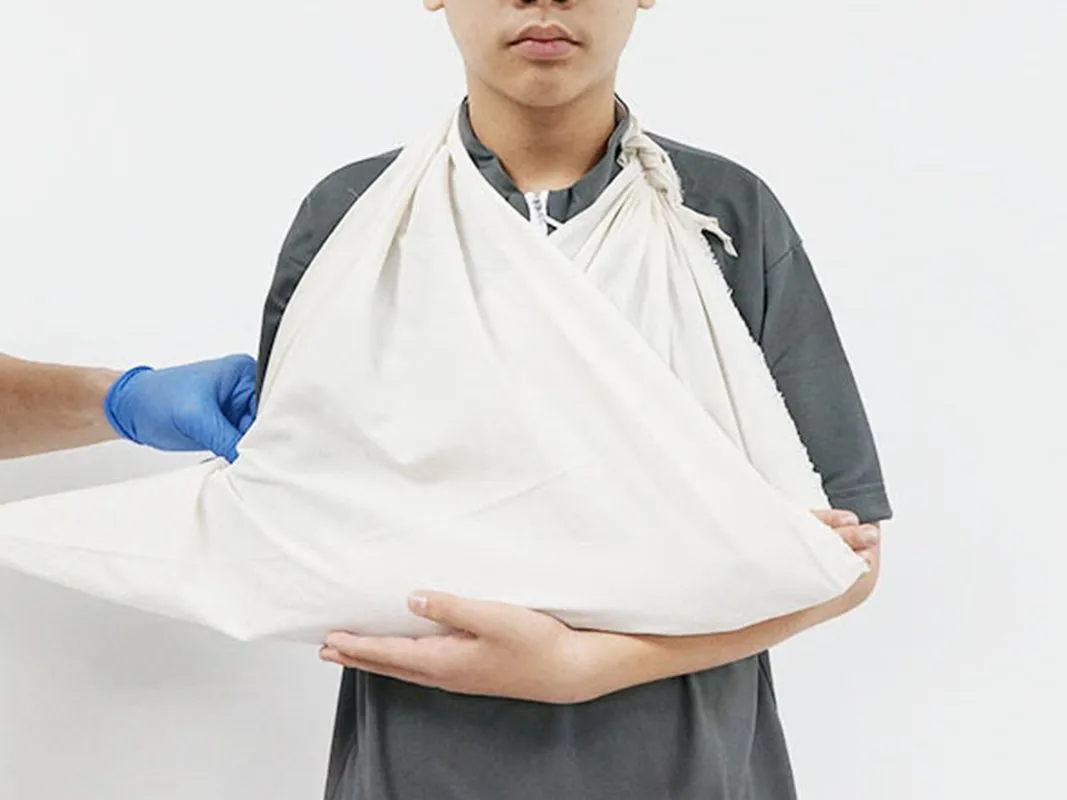
Standard First Aid
+ AED
$196.20 incl. GST ($180 before GST)
See Details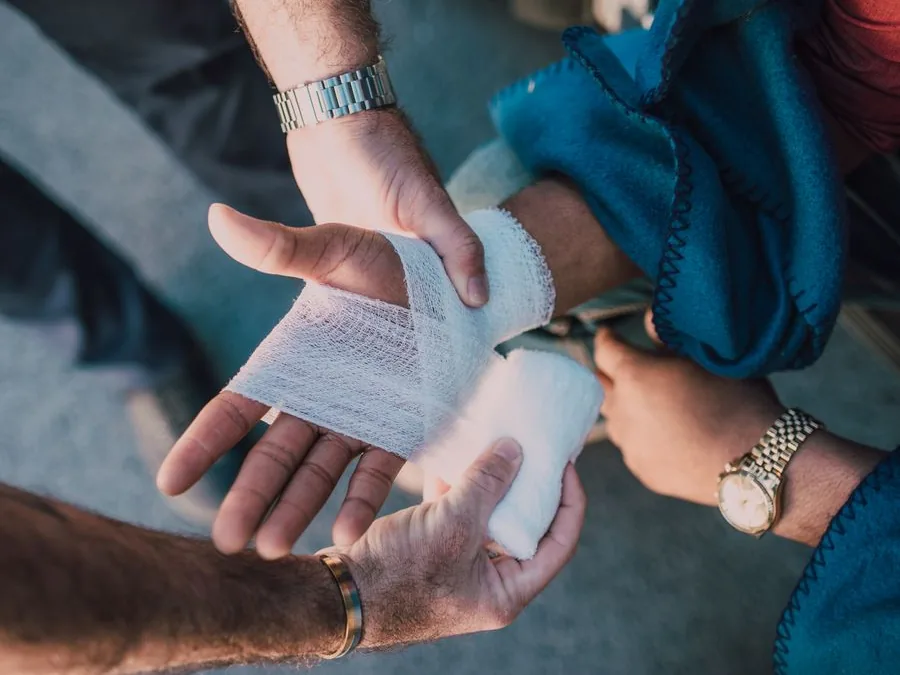
Basic First Aid
+ AED
$141.70 incl. GST ($130 before GST)
See Details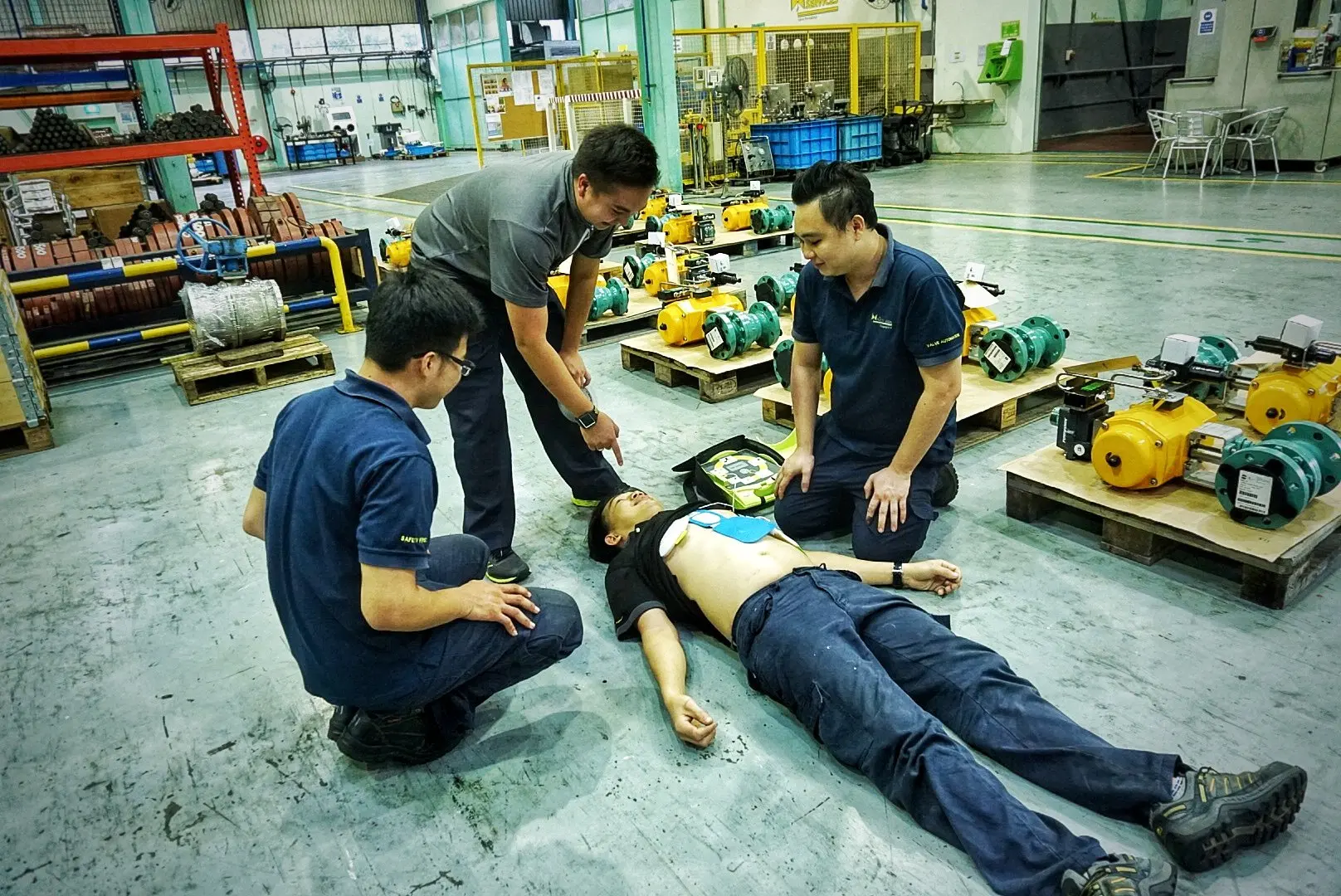
Occupational First Aid
+ AED
$346.62 incl. GST ($318 before GST)
See Details